LexiRoute:Word Card Puzzle
maazzWord
4.810.00 Reviews
- Version
- 1.0.4
- Installs
- 10.00K
- Age Rating
- Everyone
Screenshots

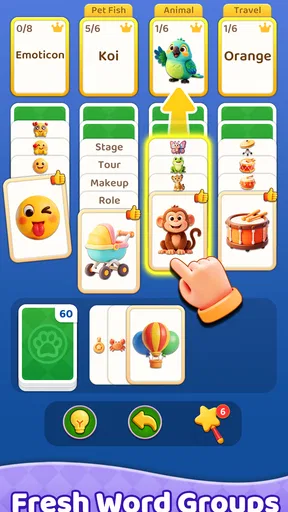
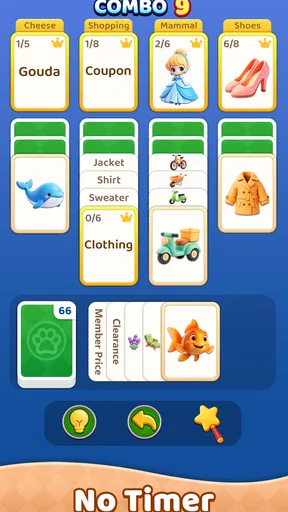

Our Review of LexiRoute:Word Card Puzzle
 Analysis by Appyee
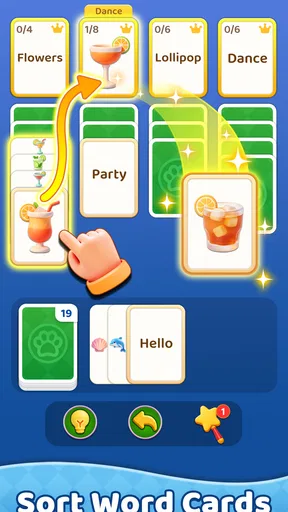
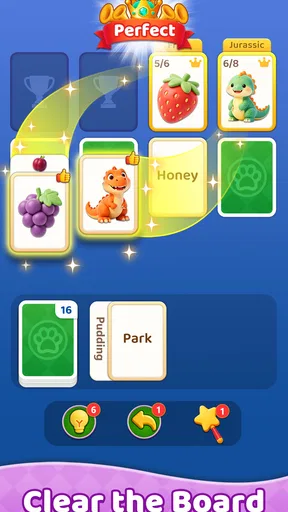
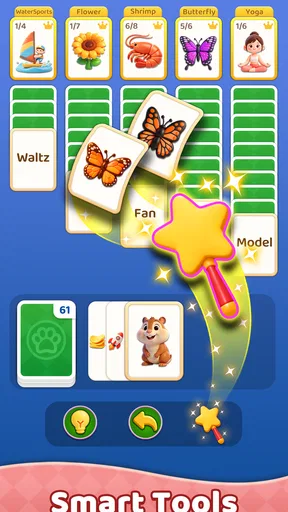
LexiRoute:Word Card Puzzle caught my attention because it turns word solving into a sorting task rather than another familiar grid of guesses. I spent time with it as a quiet, low-pressure game, and its central idea is easy to understand: arrange word cards, notice relationships between them, and use those links to finish a puzzle. That makes it approachable within minutes, but the real question is whether the idea remains satisfying after the first burst of curiosity.
My short answer is that it has a pleasant chance of becoming a regular small-break game, especially if you enjoy language puzzles that reward observation more than speed. It is free, aimed at Everyone, and made by maazz. The current release is version 1.0.4, and it runs on Android 8.0 or later. Those details make it accessible to a broad range of phones, but accessibility alone does not guarantee staying power. What matters here is how the sorting mechanic feels when the novelty wears off.
Why the first sessions feel so inviting
The opening appeal comes from the way LexiRoute asks me to look at familiar words differently. In a standard word game, I usually search for a hidden word, build one from letters, or complete a clue. Here, the important step is recognizing how cards belong together and how one discovery can point toward another. That creates a gentle sense of investigation without making the game feel like a test.
I also like that the basic interaction is mentally clean. Sorting cards gives the session a visible shape: I can see what has already been organized, what remains uncertain, and where a possible connection might fit. This is useful when I only have a few minutes, because I do not need to remember a complicated control scheme or learn a large set of rules before making progress.
The first-week experience is strongest for players who enjoy pausing over language. If you like noticing double meanings, related ideas, word families, or unexpected associations, the puzzles can feel rewarding even when they are not difficult in a conventional way. The pleasure is less about racing and more about the small click that happens when scattered cards suddenly make sense.
That calm pace also makes it suitable for everyday situations where a more demanding game would be inconvenient. I could imagine opening it while waiting for an appointment, taking a short break from work, or winding down before bed. A useful routine would be to play one puzzle without multitasking, then stop when the session feels complete rather than turning the game into an endless obligation.
The store rating is a 4.8 average from around 441 ratings, which suggests that the central concept has connected well with the people who tried it. I would not treat that figure as proof that every puzzle suits every player, but it does match my impression of the opening: the rules are friendly, the topic is approachable, and the game does not need a long explanation to become understandable.
Learning the puzzle language
One subtle part of the early experience is learning what kind of relationship the game expects me to notice. At first, I may sort cards according to an obvious connection and assume the answer is complete. Then another card can make me reconsider the grouping. This is where the game starts asking for interpretation rather than simple recognition.
My advice is not to commit too quickly to the first plausible arrangement. When a group looks correct, I would still scan the remaining cards and ask whether one of them fits more naturally. This habit reduces the frustration of repeatedly undoing a nearly finished solution, and it turns uncertainty into part of the puzzle instead of treating it as a mistake.
Another useful approach is to separate confidence levels. I would mentally mark a card as certain, likely, or unexplained. Certain cards can anchor a group, while likely cards should remain flexible until the surrounding links become clearer. That small workflow is more effective than moving everything around at random, and it is one reason the game can feel thoughtful without becoming exhausting.
Where the first-week novelty can mislead
The unusual format may initially do more work than the puzzle depth. Sorting word cards feels fresh because it is different from the usual crossword, word search, or anagram routine. A player who enjoys discovering the format may overlook whether the underlying challenge continues to change enough from session to session.
That is not a criticism of the opening. A simple idea can be exactly what someone wants. Still, I would judge the game in two stages: first, ask whether the interaction feels pleasant; then, ask whether the relationships between cards continue to make me think. The first answer is likely to be yes for casual word-game fans. The second depends more on personal tolerance for repetition and ambiguity.
What remains useful after the novelty fades
Long-term value in a compact word game comes from the quality of its recurring decisions. LexiRoute has a reasonable foundation because sorting encourages a different mental rhythm from letter-based games. I am not simply searching for an answer hidden in a grid. I am comparing possibilities, testing a structure, and deciding whether a connection is strong enough to keep.
That makes it a good fit for players who want light mental exercise without a competitive atmosphere. I can use it as a short reset between tasks, particularly when I want something more engaging than scrolling but less intense than an action game. The benefit is not that every session will be memorable; it is that the game can occupy a small, useful space in a routine.
The month-to-month question is harder. A game like this needs enough variation in its word relationships to prevent the solving method from becoming automatic. If I begin recognizing a familiar pattern immediately, the cards may still be pleasant to arrange, but the sense of discovery becomes weaker. That is the main long-term trade-off I see: the same clarity that makes the game welcoming can also make it feel predictable to experienced players.
I would keep it installed if I wanted a dependable word puzzle for brief sessions rather than a single large challenge. It works better as a recurring habit than as a game I play continuously for a long evening. That distinction matters. Someone looking for a deep campaign, a strong narrative, or a highly competitive ladder should probably choose a different type of game. Someone seeking a quiet language activity may find its modest scale appealing.
Its free price lowers the risk of trying it, which is important for a niche puzzle format. I can test whether the card relationships suit my way of thinking without making a commitment. The age rating of Everyone also makes it a reasonable choice for shared casual play, although different players will still vary widely in vocabulary and in how they interpret a connection.
A practical routine for recurring play
For lasting use, I would avoid treating LexiRoute as a game that must fill every spare minute. A better routine is to reserve it for a specific kind of pause: after finishing a task, during a commute break, or as a short evening wind-down. The game’s value is easier to notice when it remains a deliberate activity instead of becoming background tapping.
I would also change the way I approach difficult puzzles. Rather than repeatedly forcing one arrangement, I would clear the most certain relationships first and leave ambiguous cards untouched. Once the obvious structure is visible, the remaining cards often become easier to interpret. This is a concrete advantage of the sorting format: progress can come from organizing what I know, not only from discovering the final answer.
For families or friends, the game could work as a conversation prompt. One person can explain why two cards seem connected while another challenges the grouping. That makes the experience less solitary without requiring a multiplayer system. The trade-off is that the enjoyment depends on people agreeing about language, so it may be less satisfying when everyone prefers a single unambiguous answer.
Maintenance without turning play into homework
The maintenance burden is low in the practical sense. The game is small in concept, the controls are easy to remember, and I do not need to build a complicated strategy before returning to it. A short break is enough to understand what I was doing. That makes it more convenient than games that demand daily management, resource planning, or a long chain of connected objectives.
There is also a mental maintenance burden to consider. Because the game depends on noticing links, I need to stay attentive. If I open it while distracted, I may move cards mechanically and miss the relationship the puzzle is trying to reveal. The best sessions are therefore not necessarily the longest ones; they are the sessions where I can give the words a little focused attention.
For a player who wants a daily streak, achievement system, or constant progression, this may feel too understated. The appeal is in solving the immediate arrangement, not in managing a large personal profile. I would not install it expecting a second job or a long-term collection project. I would install it as a reliable mental pause that earns its place through convenience and calm.
Device compatibility helps with that role. Since it supports Android 8.0 and later, many older Android phones can run it, which is useful if I want a simple game on a spare device rather than reserving my newest phone for it. The developer, maazz, has kept the identity of the game focused: the experience is built around words and links rather than a crowded collection of unrelated systems.
What may cause fatigue over time
The first source of fatigue is the possibility of familiar reasoning. Once I understand the kinds of links the game favors, I may start applying the same mental templates repeatedly. That does not make a puzzle bad, but it changes the experience from discovery to routine. Players who need constant mechanical surprises could lose interest sooner than players who enjoy polishing a familiar skill.
A second issue is the subjectivity of word connections. A relationship that feels obvious to one person may seem loose to another. Vocabulary, cultural background, and personal associations all influence the solving process. When I disagree with a grouping, the frustration is not always about difficulty; sometimes it is about whether the intended link feels natural. That is an unavoidable challenge for a language game, but it is worth knowing before choosing it over a more rule-driven alternative.
The sorting format can also create visual and mental clutter when several cards appear plausible. The very feature that gives the game its identity may become the main source of friction. If I prefer clean clues with one direct answer, I may find the interpretive element less relaxing than expected. In that situation, a traditional crossword or a tightly structured word search would probably be a better match.
There is a difference between relaxing and effortless, and LexiRoute sits somewhere in the middle. It does not appear designed around speed, but it still asks me to concentrate. That is good when I want a small challenge and less good when I am too tired to compare meanings. I would choose it for a focused pause, not for playing while watching a show or handling another task.
Another trade-off is session length. The format is naturally suited to short bursts, but players who want a substantial evening game may feel that the experience lacks enough variety to sustain them. I would pair it with another game rather than expecting it to cover every mood. Its strength is specialization: it offers a particular kind of word puzzle and does not need to become an all-purpose entertainment package.
How it compares with familiar word games
Compared with a word search, LexiRoute feels more interpretive and less visual. A word search rewards scanning rows and diagonals, while this game asks me to understand relationships among separate cards. Compared with an anagram game, it places less emphasis on spelling speed and more on classification. Compared with a crossword, it may feel less dependent on clue-writing conventions and more focused on arranging ideas.
Those differences make the choice fairly clear. I would pick LexiRoute when I want to think about how words connect. I would choose a crossword when I want layered clues and a larger grid. I would choose an anagram game when I want quick rounds and a stronger emphasis on letter manipulation. None of these options is universally better; they simply exercise different parts of my attention.
Its advantage over many conventional alternatives is the low barrier to entry. I can understand the card-based task quickly and begin experimenting. Its disadvantage is that the same focused mechanic may offer less variety than a game with several puzzle types. If I already know that I tire quickly of one repeated format, I should treat this as a complementary download rather than my only word game.
Who should keep it installed?
I would recommend LexiRoute to someone who likes calm puzzles, enjoys making semantic connections, and wants a free game for short breaks. It is especially suitable for a player who prefers reflection over speed and does not need a story, competition, or complicated progression to stay interested. The Everyone rating also makes it approachable for mixed-age households, with the understanding that vocabulary differences can affect the experience.
I would be more cautious about recommending it to players who want constant novelty, precise clue logic, or a strong sense of advancement. If your ideal word game is a timed challenge, a large campaign, or a competitive score chase, this may feel too quiet. The same simplicity that makes it easy to return to can eventually make it feel limited.
The game has passed the first-week test for me because its sorting mechanic is understandable, distinctive, and pleasant to revisit. It also has a realistic place in a monthly routine, but only when I use it for what it does well: short, attentive word sessions. I would not force it into daily play just to make it permanent. A lasting app earns space by being useful when its particular mood is needed, not by demanding constant attention.
With over 10K installs, LexiRoute is still a relatively focused word game rather than an unavoidable mainstream staple. That suits its character. The 4.8 average shows strong early approval, but my own recommendation rests more on the fit between the mechanic and the player. If you enjoy sorting ideas and testing hidden links, it is worth trying while keeping your expectations centered on calm puzzle solving.
My final view is favorable but measured. LexiRoute earns lasting space as a compact language puzzle, not as an endlessly expanding game. I would keep it on my phone for those moments when I want something thoughtful, free, and easy to pick up. I would skip it if I needed dramatic progression or a constantly changing challenge. After the novelty fades, its value depends on whether the simple act of finding order among words still feels rewarding—and for the right player, it can.
Verdict
Strengths of LexiRoute:Word Card Puzzle
- Short word rounds make it easy to play during quick breaks.
- Gradual difficulty helps newcomers learn the game without feeling overwhelmed.
- Card-based puzzles give the usual word-search format a refreshing twist.
- Offline play is useful when traveling or playing without a stable connection.
- Simple controls make the game comfortable on both phones and tablets.
Limitations of LexiRoute:Word Card Puzzle
- Some puzzles may feel repetitive after extended play sessions.
- Hints can reduce the challenge for players seeking a pure brain workout.
- Progress may become slower if later levels require repeated attempts.
- Small text or card details could be difficult to read on compact screens.
- The game may appeal less to players who prefer action or multiplayer gameplay.
Similar Picks in This Category
View All
Word Search - Word Puzzle Game
Bluetile4.8

Word Search Quest - Puzzles
Blackout Lab4.8

CodyCross: Crossword Puzzles
Fanatee, Inc.4.7

Words of Wonders: Crossword
Fugo Games4.9

Wordscapes: Word puzzle game
PeopleFun4.7

Word Search Explorer
PlaySimple Games4.9
Frequently Asked Questions
What is LexiRoute: Word Card Puzzle?
LexiRoute: Word Card Puzzle is a word-based puzzle game that combines card mechanics with vocabulary challenges. Players arrange, connect, or select letter and word cards to complete objectives and progress through levels. Its core gameplay is designed for short sessions, making it suitable for casual play, although later puzzles may require more planning, pattern recognition, and careful use of available cards.
Is LexiRoute: Word Card Puzzle free to download and play?
The game can generally be downloaded at no initial cost, but availability of advertisements, optional purchases, or premium content may depend on the version and platform. Before installing, check the Google Play Store or Apple App Store listing for current pricing, in-app purchase details, and any subscription information. This is especially important if children may use the device.
Does LexiRoute: Word Card Puzzle require an internet connection?
Many puzzle games allow at least part of their content to be played offline, but features such as advertisements, cloud synchronization, rankings, updates, or special events may require an internet connection. After installation, test the game in airplane mode to confirm which functions remain available. Offline behavior can also change after updates, so the store description should be checked regularly.
Is LexiRoute: Word Card Puzzle suitable for children and English learners?
The game may be useful for players who enjoy spelling, vocabulary, and word-association challenges, including English learners with an appropriate difficulty level. However, vocabulary games can contain uncommon words, idioms, or culturally specific expressions that may be confusing for younger users or beginners. Parents should review the game’s age rating, advertising, privacy information, and purchase controls before allowing independent play.
What should I know about difficulty, progress, and gameplay limitations?
LexiRoute: Word Card Puzzle is best suited to players who enjoy gradually increasing word challenges rather than fast action. Progress may depend on solving levels, earning rewards, or managing limited attempts and hints, depending on the current version. If the game includes ads or energy systems, these may affect pacing. Check whether progress is linked to an account or device before reinstalling or changing phones.
Play our best games!


